The Numbers Behind the Trade
- COPX 12-Month Return: +92.29%
- USO YTD Return (Through June 23): +60.89%
- USO 1-Month Decline: -22.3%
- COPX Assets Under Management: $7.71B
- COPX Dividend Yield: 2.42%
- USO Dividend Yield: 0.00%
Why USO Can't Keep Up
USO does exactly one thing well: it gives retail traders liquid WTI crude exposure without a futures account. That utility pulled in capital every time geopolitics flared, and the fund delivered a 60.89% year-to-date gain through June 23 as WTI swung from $55.44 in December 2025 to a $114.58 peak in April 2026. Then the structure caught up with it.
Holding front-month WTI futures means rolling contracts forward each month. When the curve slopes upward—contango—that roll bleeds value. The fund also hands holders a K-1 at tax time, complicating filings for anyone in a taxable account. But the real issue is the commodity itself. WTI dropped 22.3% over the past month to $84.65 on June 15, with a twelve-month average price of $73.15. Crude oil has become a geopolitical instrument, not a secular growth trade you can buy and forget.
Copper Just Took Over the Demand Story
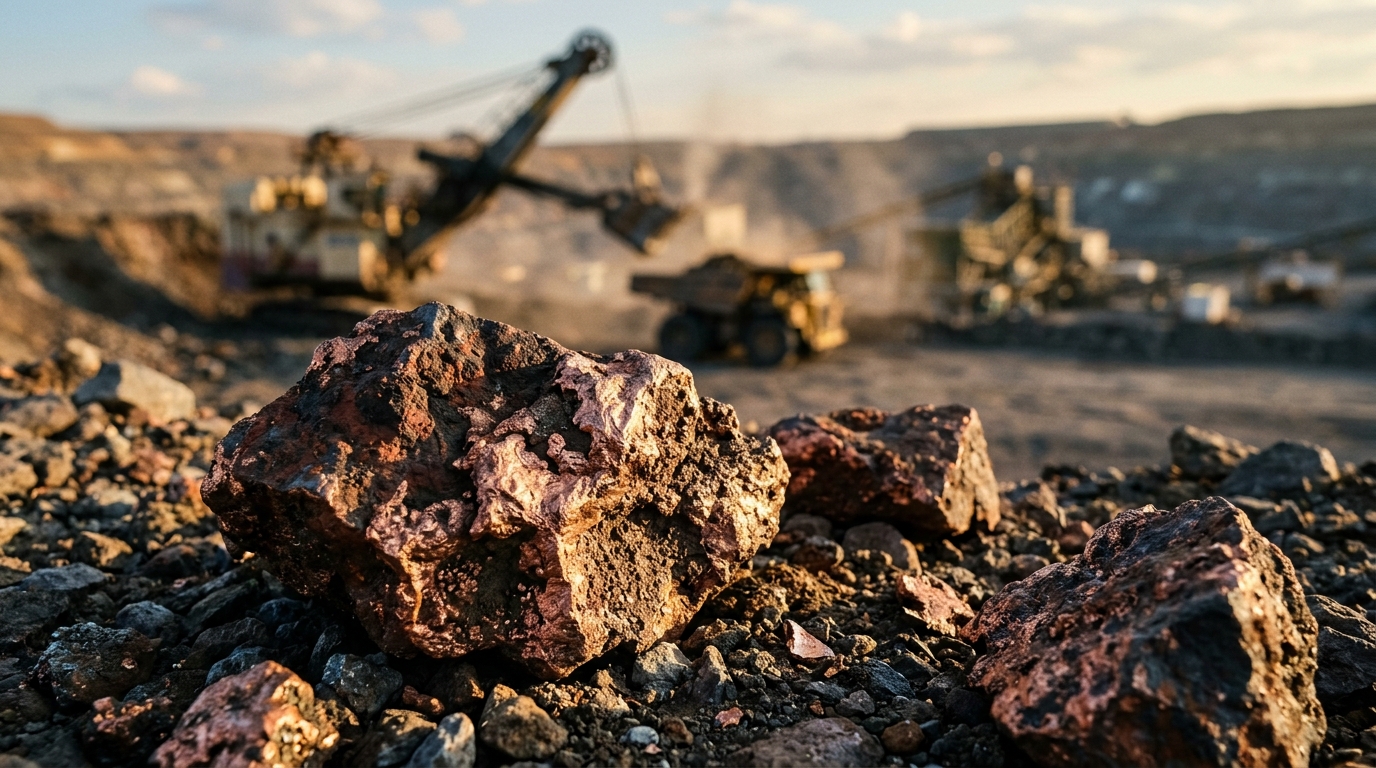
The Global X Copper Miners ETF holds 46 copper mining stocks, charges a 0.65% expense ratio, and commands $7.71 billion in assets. The one-year total return hit 108% through June 21, though a sharp two-day selloff trimmed the trailing twelve-month figure to 92.29% as of June 23. That backward-looking number reflects a cyclical sector at the top of its range. The structural case sits underneath.
Copper demand is projected to rise materially through 2040, driven by grid buildout, electric vehicles, defense contracts, and AI data centers. The U.S. added copper to the USGS Critical Minerals list. Concentrate markets remain exceptionally tight, with treatment and refining charges compressed sharply this year. Unlike crude, where supply responds quickly to price, copper supply is constrained by permitting timelines, ore grades, and jurisdictional risk.
The Operating Leverage USO Cannot Replicate
USO captures the spot move in oil minus roll drag. COPX captures the spot move in copper multiplied by miner operating leverage. The first-quarter earnings from the fund's largest holdings illustrate the gap.
Southern Copper (NYSE: SCCO), a 9.7% position, posted higher year-over-year revenue and a negative operating cash cost per pound as by-product credits from silver and gold flipped the cost line below zero. Freeport-McMoRan (NYSE: FCX), at 9.9%, reported higher EPS on a stronger realized copper price, with net income rising sharply year over year. Other major holdings showed the same pattern: when realized copper prices step up, miner margins step up faster.
The trailing dividend for COPX is $1.92 per share, yielding 2.42% on a semi-annual schedule. USO pays nothing.
Top Two Holdings: How They Print Cash When Copper Moves
Freeport-McMoRan (FCX) (9.9% Weight)
Reported higher EPS on stronger realized copper prices in Q1. Net income rose sharply year over year as margin expansion kicked in. The Grasberg mine in Indonesia remains a wild card—mud rushes still cap output—but when copper prices climb, the operational gearing shows up fast.
Southern Copper (SCCO) (9.7% Weight)
Posted higher revenue and an operating cash cost per pound that went negative, thanks to by-product credits from silver and gold. When your cost line dips below zero and copper prices rise, every incremental ton is nearly pure margin. That's the leverage USO can never access.
The Real Tradeoffs You're Taking On
COPX is structured as an equity fund holding mining stocks, not a physical or futures-based commodity vehicle. Beta sits at 1.07, and the 52-week range of $41.51 to $99.99 shows how violent the swings can be. The fund dropped 11.49% in the past week alone.
Holdings carry mine-level operational risk—the Grasberg mud rush still caps Indonesian output—and jurisdictional exposure in Peru, Chile, and the Democratic Republic of the Congo. A China growth scare or a rate shock will hit COPX harder than it will hit a diversified equity ETF.
On the upside, the structural switch from K-1 to 1099 reporting simplifies tax filing, and the underlying exposure shifts from a futures roll to operating businesses that compound retained earnings. You're trading the simplicity of a commodity wrapper for the complexity—and the upside—of actual companies.
What a Rotation Actually Looks Like
For someone using USO as a tactical crude bet, a rotation in an IRA would mean exiting that position, redeploying into COPX, and accepting the higher equity beta that comes with it. In a taxable account, the K-1 cost basis needs a thorough review before any sale, and a partial rotation may make more sense than a full one—especially given how extended copper miners look after a doubling.
The real decision turns on whether the next decade of commodity demand looks more like grid copper or marginal barrels of oil. The data points to the former. The caveat is that COPX is already priced for that outcome.
FAQ
Why does COPX outperform when copper prices rise, but USO lags when oil prices rise?
USO holds front-month WTI futures and rolls them forward, capturing only the spot price move minus contango drag. COPX holds equity in copper miners, which magnify the spot price move through operating leverage—when copper prices rise, miners see revenue gains that flow disproportionately to the bottom line because fixed costs stay flat. Southern Copper's negative cash cost and Freeport's sharply higher net income illustrate this effect.
What's the risk of holding COPX after a 115% gain?
Valuation risk and cyclical exposure. After a doubling, a lot of the structural copper story is already priced in. A China slowdown, a rate spike, or a correction in risk assets will hit COPX harder than a bond fund or a broad equity index. The 52-week range of $41.51 to $99.99 and the 11.49% drop in a single week show how fast sentiment can reverse.
Why did the U.S. add copper to the Critical Minerals list?
Supply chain security. Copper is essential for grid infrastructure, electric vehicle production, defense systems, and data center buildout—all areas where domestic sourcing matters. Adding it to the USGS Critical Minerals list signals policy support for domestic production and stockpiling, which tightens the supply outlook and supports long-term prices.
Does COPX hand out a K-1 like USO?
No. COPX is structured as an equity ETF holding mining stocks, so it issues a 1099 at tax time. That simplifies filing for taxable accounts compared to USO's K-1, which often delays tax prep and adds complexity.
This content is for informational purposes only and does not constitute investment advice, a recommendation to buy or sell any security, or an offer of financial services. Commodity and equity investments carry risk, including potential loss of principal. Past performance does not guarantee future results. Consult a qualified financial advisor before making investment decisions.